Tuesday, 15 February 2011

Thursday, 10 February 2011
Web 2.0
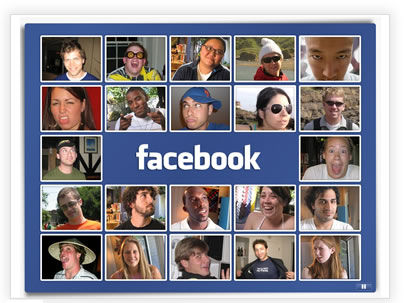 Web 2.0 is a new version of internet which actually allows users to interact with the subject, rather than just consuming it. users can create their own media to post on websites, get feeback, discuss things, create their own blogs or profiles and interact with each other.
  websites such as youtube does just that, anyone can create a video, post it online, get people to comment on it, and watch others' videos. Also social networks such as faceook, and blogs allow users to create profile to post information, pictures, videos and opinions for other people to view.
 Advantages of Web 2.0 are that it has majorly developed the internet and the amount of people using it. information can be shared extreemly quickly and relatively cheaply. people can connect with each other from all over the world to share information. Internet site companies have made a lot of money out of web 2.0 sites, such as youtube and facbook. information can be gathered and collected to one place for millions of people to view.
Disadvantages of web 2.0 are there are major issues with copyright, as it is easy to post music and films online for others to download for free. this is unfair to the creators of the media, who for producing it should get profits from it. Also, as anyone can post things, it is not always true.
How Has Expansion of Digital Media Been an Improvement For Audiences?
The expansion of digital media has been a huge improvement for audiences, as media can now be accessed anywhere, anytime and in a range of ways. one of the biggest improvements is one demand watching and videos available online, as now audiences can pick and choose exactly what they want to watch, according to their own preferences.
The process of audience fragmentation has been an outcome of imroved media. whereas previously audiences were limited to a selection of tv channels, newpapers and radio, now there are a much wider range of media, and people having preferences, such as social networking, blogging, on demand tv etc. The way we consume even these new medias have also changed, with being able to access media via phones, laptops, iPads, games consoles. also cinemas and DVDs have adapted with the development of blu-ray, 3D, hd etc. Another aspect of audience fragmentation is genre. now people can access media in a range of ways and places, people can choose specifically what they want to watch, with had developed a incredibly broad range of genres and sub genres, cult films and low budget films.
The process of audience fragmentation has been an outcome of imroved media. whereas previously audiences were limited to a selection of tv channels, newpapers and radio, now there are a much wider range of media, and people having preferences, such as social networking, blogging, on demand tv etc. The way we consume even these new medias have also changed, with being able to access media via phones, laptops, iPads, games consoles. also cinemas and DVDs have adapted with the development of blu-ray, 3D, hd etc. Another aspect of audience fragmentation is genre. now people can access media in a range of ways and places, people can choose specifically what they want to watch, with had developed a incredibly broad range of genres and sub genres, cult films and low budget films.
Wednesday, 9 February 2011
How Does The Skins Promo Trailer Create Representation Of Young People?
Editing
The skins trailer is a sequence of shot quick cuts. This makes it very fast paced, reflecting the party and the character's lives. we get the impression that this is a very out of control party, possibly with the quick cuts, that things happen too quickly for anyone to keep up and therefore uncontrollable. Some clips last very quickly, to give the impression of people dancing, things going on, while others last a little longer, possibly to give an idea of a storyline for the drama. The whole impression of short and long clips gives the idea that there is a lot going on and there are a lot of people at this party, also another indication of uncontrollability. The fast-paced editing also keeps in time with the music, with slower parts of the song lingering longer on a shot, and faster parts moving even quicker through a range of different shots. There are also several shots in the second half of the trailer that are in slow motion, while the music is slightly mellower, focusing on the main characters in the drama’s faces.

Sound
The only sound in this trailer is non-diegetic, standing in the way of control by the Gossip. This plays on the fact that this party is very out of control, so has several connotations of alcohol, drugs, violence and vandalism, what young people are often associated with today. The song is also very fast paced which keeps up with the quick cut sequence and also what the characters are doing. There is a lot going on and people are doing all sorts of things, so both the camera and editing, and the sound has to keep up with them. There are several slower parts to the song which are slightly calmer, which the filming matches by slowing the pace of the sequence, and it also indicates a change in the trailer. Where the first part is very upbeat, positive, people have a good time, the second part is more negative, people being sick, having fights, throwing and breaking things. The sound plays a big role in the effect of this change, and especially at the end there are no lyrics, just heavy drumbeat and humming. This change could indicate that things may have gone a little too out of hand, that the consequences of their actions are catching up with them and the realistic, darker side of mad parties is revealed.
Mise-en-scene

The skins trailer is a sequence of shot quick cuts. This makes it very fast paced, reflecting the party and the character's lives. we get the impression that this is a very out of control party, possibly with the quick cuts, that things happen too quickly for anyone to keep up and therefore uncontrollable. Some clips last very quickly, to give the impression of people dancing, things going on, while others last a little longer, possibly to give an idea of a storyline for the drama. The whole impression of short and long clips gives the idea that there is a lot going on and there are a lot of people at this party, also another indication of uncontrollability. The fast-paced editing also keeps in time with the music, with slower parts of the song lingering longer on a shot, and faster parts moving even quicker through a range of different shots. There are also several shots in the second half of the trailer that are in slow motion, while the music is slightly mellower, focusing on the main characters in the drama’s faces.
Camera Angles & Movement
The camera angles used varies a lot. There are several long shots of the entire room, to show everyone at the party. This is to give us an idea of the scale of the party, the amount of people there, and where they are: the room which seems to be pretty wrecked. There are also several close ups, which mostly seem to be showing drug use. This portrays young people in bad yet stereotypical way, as if the trailer is flaunting exactly all the bad thing teenagers are known for. Mostly the camera angles are mid shots, often with people kissing or dancing.
The movement of the camera is usually slight, following action or other movement in the sequence, for instance when Tong knocks a vase over and the camera follows it to the floor to see it smashed. A lot of the time it seems to be panning slightly, as if it was the view of someone at the party as the movement is not always moving in a planned and smooth way. The idea of it seeming as an onlooker of the party makes it seem all the more of a real representation, as if this is like what happens at real life parties.
Sound
The only sound in this trailer is non-diegetic, standing in the way of control by the Gossip. This plays on the fact that this party is very out of control, so has several connotations of alcohol, drugs, violence and vandalism, what young people are often associated with today. The song is also very fast paced which keeps up with the quick cut sequence and also what the characters are doing. There is a lot going on and people are doing all sorts of things, so both the camera and editing, and the sound has to keep up with them. There are several slower parts to the song which are slightly calmer, which the filming matches by slowing the pace of the sequence, and it also indicates a change in the trailer. Where the first part is very upbeat, positive, people have a good time, the second part is more negative, people being sick, having fights, throwing and breaking things. The sound plays a big role in the effect of this change, and especially at the end there are no lyrics, just heavy drumbeat and humming. This change could indicate that things may have gone a little too out of hand, that the consequences of their actions are catching up with them and the realistic, darker side of mad parties is revealed.
Mise-en-scene
Monday, 31 January 2011
Narrative Theories
Vladimir Propp was a Russion scholar who analysed the narrative structure of Fairy tales. He found common themes of the narrative, and of characters within the story. He identifies 31 functions of a fairy tale, in 4 speres of the story; 1st sphere: the introductory sequence, 2nd sphere: the body of the story, 3rd Sphere: the donor sequence, and the 4th sphere: the hero's return. Within these spheres are several parts of the narrative. He also propsed 8 character types; the villain, the hero, the donor ( a magical character that gives advice to the hero), the helper, the princess/prize, the princesses' father, the dispatcher and the false hero.
Tzvetan Todorov is a French-Bulgarian philosopher. His narrative theory suggests that all stories begin with an equilibrium; everything is fine. Then there is a disruption of this peace, which has to be solved by the end, for everything to be restored as it should be, creating a new equilibrium.
Roland Barthes was a french literary theorist. He described text as "a galaxy of signifiers, not a structure of signifieds; it has no beginning; it is reversible; we gain access to it by several entrances, none of which can be authoritatively declared to be the main one; the codes it mobilizes extend as far as the eye can read, they are indeterminable...the systems of meaning can take over this absolutely plural text, but their number is never closed, based as it is on the infinity of language..." He categorised narrative codes in five ways; Hermeneutic Code: elements of the storyline that are unexplained and therefore remain a mystery to the audience, Proairetic Code: action or events that cause tension, Semantic Code: connotations of the story, Symbolic Code: similar to semantic code, but organises semantic meaning in a broader and deeper way, and Cultural Code: the basis of which everything is founded upon, which is not challened and is assumed to be true.
Claude Levi-Strauss was a French anthropologist and ethnologist. He focused on narrative theory specifically to do with binary oppositions. These opposite values could be the cause for conflict. e.g. good & evil, alien & human, known & unknown.
Reference: Wikipedia, changingminds.org
Tzvetan Todorov is a French-Bulgarian philosopher. His narrative theory suggests that all stories begin with an equilibrium; everything is fine. Then there is a disruption of this peace, which has to be solved by the end, for everything to be restored as it should be, creating a new equilibrium.
Roland Barthes was a french literary theorist. He described text as "a galaxy of signifiers, not a structure of signifieds; it has no beginning; it is reversible; we gain access to it by several entrances, none of which can be authoritatively declared to be the main one; the codes it mobilizes extend as far as the eye can read, they are indeterminable...the systems of meaning can take over this absolutely plural text, but their number is never closed, based as it is on the infinity of language..." He categorised narrative codes in five ways; Hermeneutic Code: elements of the storyline that are unexplained and therefore remain a mystery to the audience, Proairetic Code: action or events that cause tension, Semantic Code: connotations of the story, Symbolic Code: similar to semantic code, but organises semantic meaning in a broader and deeper way, and Cultural Code: the basis of which everything is founded upon, which is not challened and is assumed to be true.
Claude Levi-Strauss was a French anthropologist and ethnologist. He focused on narrative theory specifically to do with binary oppositions. These opposite values could be the cause for conflict. e.g. good & evil, alien & human, known & unknown.
Reference: Wikipedia, changingminds.org
Wednesday, 26 January 2011
Convergence of Game Show
Bamboozle is a game show where the contestents have to answer quiz questions based on general knowlege. It has several interesting twists, such as the wheel of fortune and the wicked wango card. The scores are based on a point system depending on the participants answers and luck on the wheel. The winner at the end is 'Bamboozled' and goes home with a cash prize.
 The Game show, Bamboozle, will be converged in several ways. Firstly it will feature as a computer game for the wii, xbox and playstation, and also as a download for your iPhone. This allows the audience to participate in the game, even if they are not able to go on the show. The show will have it's own website, in which live episodes can be watched, which has several features such as being able to choose which camera to watch the show from, allowing them to see the contestents faces and expressions close up, and to be immersed in the action. It will feature profiles from all the previous winnerss of the show, and have competions and downloads available. The main feature of the website, however, is that people can sign up to be included in the draw to be contestents on the next show. A selcetion of people get chosen at random, who then have to complete another task before they are entered into the show.
 Production Converegnce will affect the production stage as the competetors are picked by the internet website. The porduction team will have to create several on stage cameras for the website feature of allowing the consumer to view the stage and the action in 3D while the show is live.
Marketing This will improve due the wide audience appeal, as the game is availaable for children, and as a video game, which allows families to take part themselves at home. Advertising will appear via TV, websites and on similar products on sale.

Exhibition This will change as the audience can stream the show direct to their iPhone app. The show will also be available online, and of course on TV.
Technologies The show will need specialist cameras to allow the inernet audience to view the show live with a 3D, self viewing feature.
Consumption The show will be available online, on the iPhone app, but also through the game versions, the website and the childrens version.
Monday, 10 January 2011
The Male Gaze; Laura Mulvey '85
Mulvey was born 15th August 1941, and is a film theorist, as well as a strong feminist. Mulvey argued that in film, women are often portrayed as sexual visual pleasures for men, a technique is used where the audience is put into the role of a man, and on screen the camera lingers on the female, displaying her as visual pleasure for men. The theory implys that women are seen as objects of men, and are made to view the media as in the perspective of a man.
Subscribe to:
Posts (Atom)